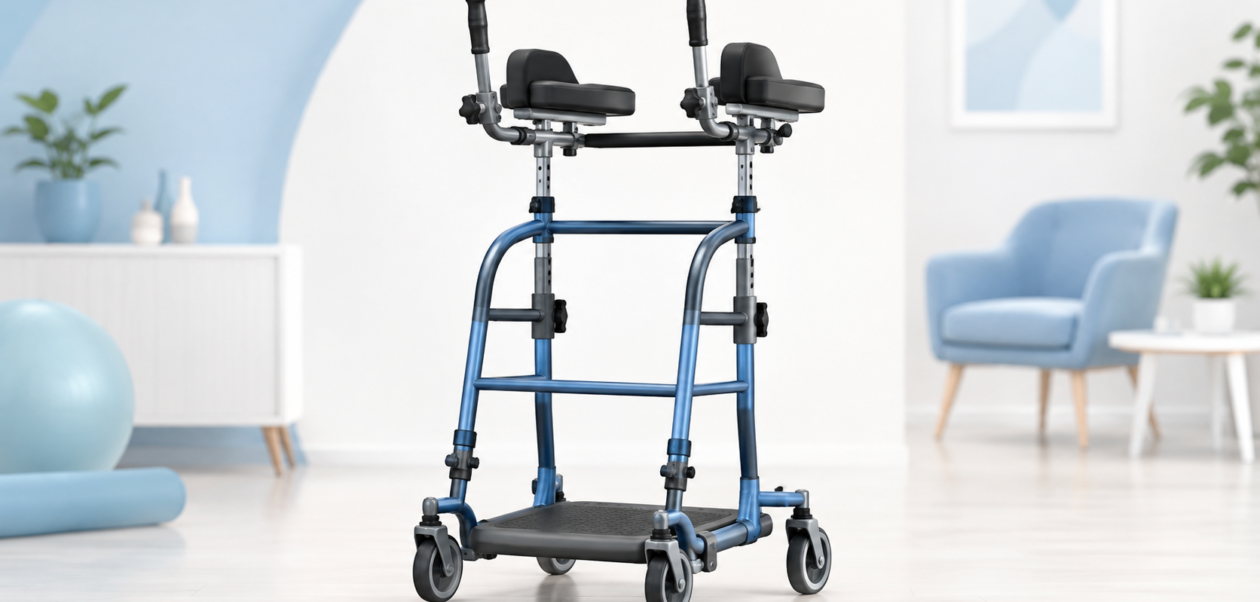
| Quick answer A platform walker is a specialized walker that supports the forearms on padded platforms. It can be useful when a person has trouble gripping a standard walker or needs forearm-based support. The correct device and fit depend on the individual, so a physical or occupational therapist should confirm safe use. |
|---|
A platform walker looks similar to a standard walking frame, but it adds padded supports for one or both forearms. Because of that design, the user may place more support through the forearms instead of relying only on the hands and wrists. This can make the device useful for some people who have limited grip strength, reduced hand control, or other upper-limb limitations.
Cleveland Clinic describes a forearm support walker as a device also called a platform walker, upright walker, or gutter frame. Its padded supports let the user bear weight through the forearms rather than only through the wrists.
However, a platform walker is not automatically the right choice for every mobility problem. The safest option depends on balance, strength, weight-bearing restrictions, home layout, and the way a person walks. This guide explains the main types, benefits, limits, safety points, and buying considerations in simple language.
In This Guide
- What is a platform walker?
- How a platform walker works
- Platform walker vs. standard walker
- Platform walker vs. upright walker
- Who may benefit
- Types and key features
- Benefits and limitations
- Posture: what the device can and cannot do
- General fitting and safety
- How to choose one
- When to speak with a PT or OT
- Frequently asked questions
What Is a Platform Walker?
A platform walker is a walking aid with a supportive platform attached near the top of the frame. The platform usually has padding for the forearm and may include a strap, an adjustable hand grip, or both. Some walkers have one platform attachment. Others use a platform on each side.
The purpose is simple: give the user another way to support the upper body while walking. Instead of depending entirely on a firm hand grip, the forearm can rest on the padded support. That design is especially relevant when hand strength or dexterity is limited.
For example, the Graham-Field platform walker attachment is designed for users with limited strength or dexterity who cannot grip a walker comfortably. Its product information also describes an adjustable strap, padded forearm rest, hand grip, universal clamp, and tool-free adjustment.
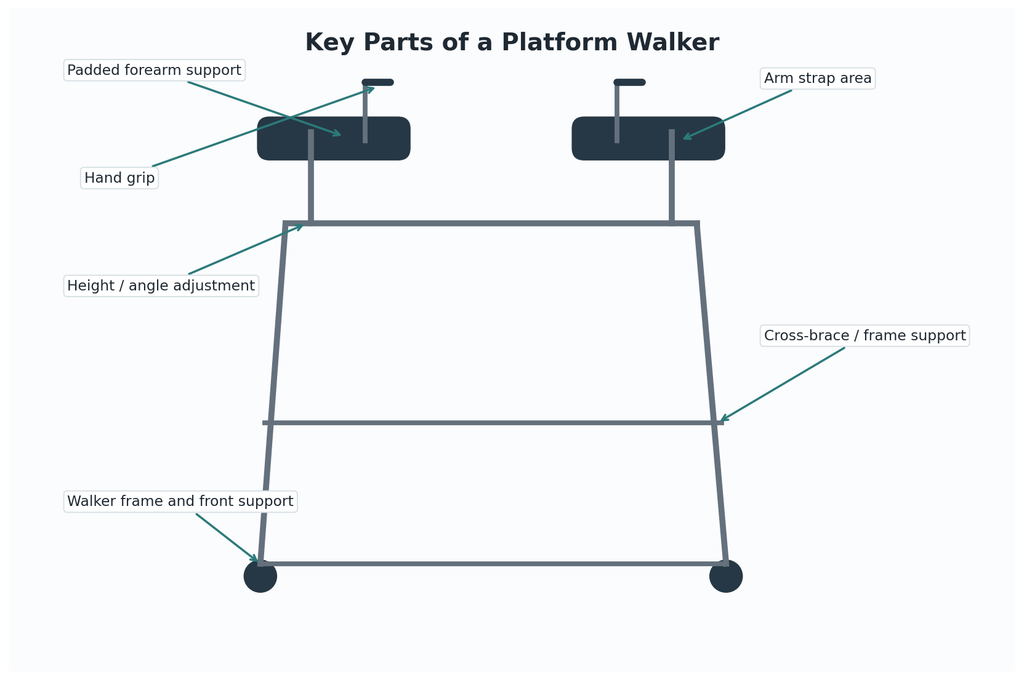
Figure 1. Common parts of a platform walker. Original illustration.
How Does a Platform Walker Work?
A standard walker sends much of the upper-body support through the hands. A platform walker changes that contact point. The forearm rests on a padded surface, while the hand may hold a nearby grip if the user is able to do so.
This setup can reduce the need for a strong grasp. It may also spread pressure across a larger area of the arm. Still, the walker must be positioned correctly. A poor setup can make walking awkward, increase fatigue, or encourage the user to place the device too far in front.
The Dynarex Platform Walker Attachment provides a useful example of the design. Its official specifications mention contoured forearm padding, an adjustable arm strap, easy-clean hand grips, and compatibility with many walkers.
Platform Walker vs. Standard Walker
| Feature | Standard Walker | Platform Walker |
|---|---|---|
| Main upper-body contact | Hands and wrists | Forearms, plus hand grips when available |
| Grip demand | Usually higher | Can be lower for some users |
| Typical design | Simple frame with hand grips | Frame plus one or two padded forearm supports |
| Adjustment needs | Height and hand position | Height, forearm position, angle, straps, and grips |
| Best choice depends on | Balance, strength, environment | Balance, strength, upper-limb function, restrictions, environment |
Table 1. General comparison. Individual recommendations should come from a clinician who has assessed the user.
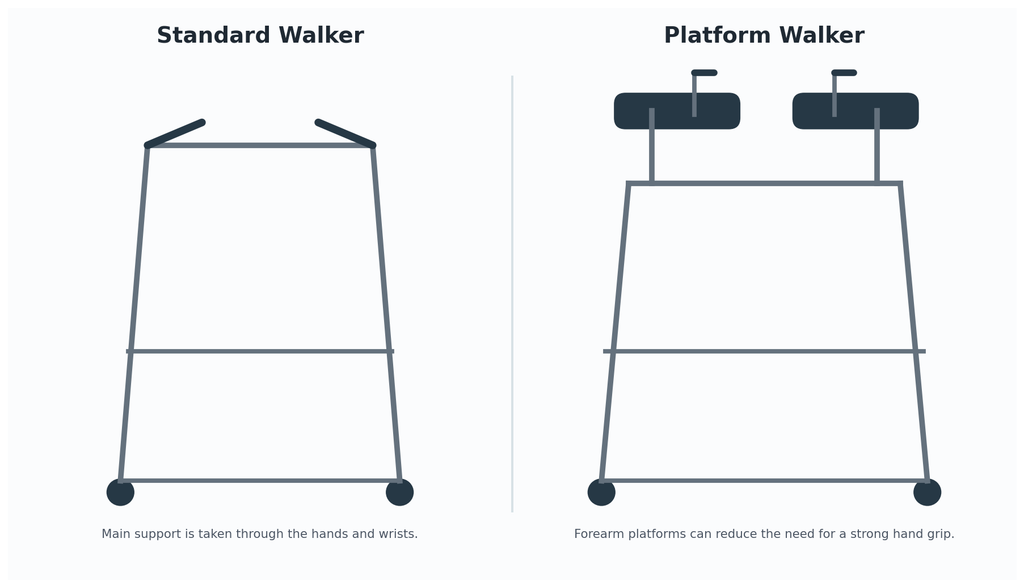
Figure 2. Standard walker and platform walker: the main support point is different. Original illustration.
Platform Walker vs. Upright Walker
The terms can be confusing. Cleveland Clinic lists “platform walker,” “upright walker,” and “gutter frame” as names used for forearm support walkers. In retail listings, however, “upright walker” is also used for four-wheel rollator-style devices with tall arm supports.
That means the name alone is not enough. Look at the actual design. A traditional platform attachment is usually fixed to a walker frame and supports the forearm. A modern upright rollator may have four larger wheels, brakes, a seat, and tall forearm supports. These devices can feel very different in a home or community setting.
Who May Benefit From a Platform Walker?
A platform walker may be considered when a person needs walking support but has difficulty using normal hand grips. Possible reasons include limited grip strength, reduced dexterity, hand control problems, or some forms of upper-extremity weakness.
A rehabilitation-focused article in the National Library of Medicine notes that platform walkers can have a role when significant upper-extremity weakness affects walking support. This does not mean every person with weakness needs one; it shows why clinician assessment matters.
Platform walkers may also be used temporarily in rehabilitation. However, an injury does not automatically make forearm loading safe. If someone has a fracture, surgery, or a “non-weight-bearing” restriction, the treating clinician must confirm whether pressure through the forearm or elbow is allowed.
Common Types of Platform Walkers
1. Single platform attachment
A single attachment is fitted on one side of a walker. This may be used when one hand or arm cannot use a standard grip normally.
2. Bilateral platform walker
This setup has a forearm platform on both sides. It provides a more symmetrical forearm support position, although it is usually bulkier than a basic walker.
3. Platform walker with front wheels
Some frames use small front wheels and rear tips. This lets the walker roll forward instead of being fully lifted with every step.
4. Upright forearm rollator
Some products combine forearm supports with larger wheels, hand brakes, and a seat. These are often marketed as upright walkers. They should not be assumed to work like a traditional two-wheel platform walker.
5. Bariatric platform attachment
Higher-capacity attachments also exist. For example, Dynarex lists a Bari+Max platform attachment with a higher published weight capacity than its standard model. Always match the walker frame, attachment, and user weight to the manufacturer limits.
Key Features to Check
- Forearm padding: It should feel supportive and should not create a hard pressure point.
- Arm strap: A strap can help keep the forearm positioned, but it must not be so tight that it causes discomfort.
- Hand grip position: The grip should be reachable without forcing the shoulder or wrist into an awkward angle.
- Height and angle adjustment: The platform needs to match the person, not the other way around.
- Walker compatibility: Not every attachment fits every frame.
- Weight capacity: Check both the walker and the attachment limits.
- Wheel setup: Front wheels, rear tips, or four-wheel designs change how the device moves.
- Folding and transport: A bulky design may be difficult to load into a car or use in a small home.
- Replacement parts: Padding, straps, grips, wheels, and tips can wear over time.
Benefits of a Platform Walker
The main benefit is an alternative support point. For the right user, this can make a walker usable when standard hand grips are difficult. It may also allow a clinician to create a safer walking setup during rehabilitation.
- May reduce the need for a strong hand grip.
- Can support one or both forearms.
- Offers more adjustment options than a basic walker.
- Can be added to many standard walker frames when the attachment is compatible.
- May help some users stay more independent during short-distance walking or rehabilitation.
These are potential benefits, not guarantees. The device still has to match the user’s balance, strength, coordination, and medical restrictions.
Limitations and Safety Concerns
A platform walker can also have downsides. The added supports make the frame larger and more complex. A user may need extra space to turn. Some models are harder to fold or transport. In a small home, that can matter as much as the medical features.
Another concern is over-reliance on the arm supports. If the platforms are set too high or too far forward, the user may lean into the device instead of keeping it close. That can change the walking pattern and increase fatigue.
Most importantly, the walker should not be used to bypass medical restrictions. If a clinician has limited weight bearing through the hand, wrist, elbow, or arm, the exact restriction should be clarified before a platform attachment is used.
Does a Platform Walker Improve Posture?
It can change the position of the arms and trunk, but it should not be marketed as an automatic posture fix. A person can still lean forward or push the walker too far ahead, even when the forearms are supported.
This concern also appears in physical therapy community discussions on Reddit where clinicians describe mixed experiences with upright or platform-style walkers. Reddit is useful for real-world discussion, but it is not a medical authority. The key takeaway is that fit and walking technique still matter.
Therefore, choose the device because it matches functional needs. Do not choose it only because an advertisement promises better posture.
General Fitting Principles
A platform walker needs more fitting than a basic frame. The forearm support should be placed so the arm can rest comfortably. Cleveland Clinic notes that a forearm support walker commonly positions the padded support with the forearm at about a 90-degree angle.
That is a general description, not a personal prescription. Shoulder comfort, trunk control, arm length, balance, and the type of walker all affect the final setup.
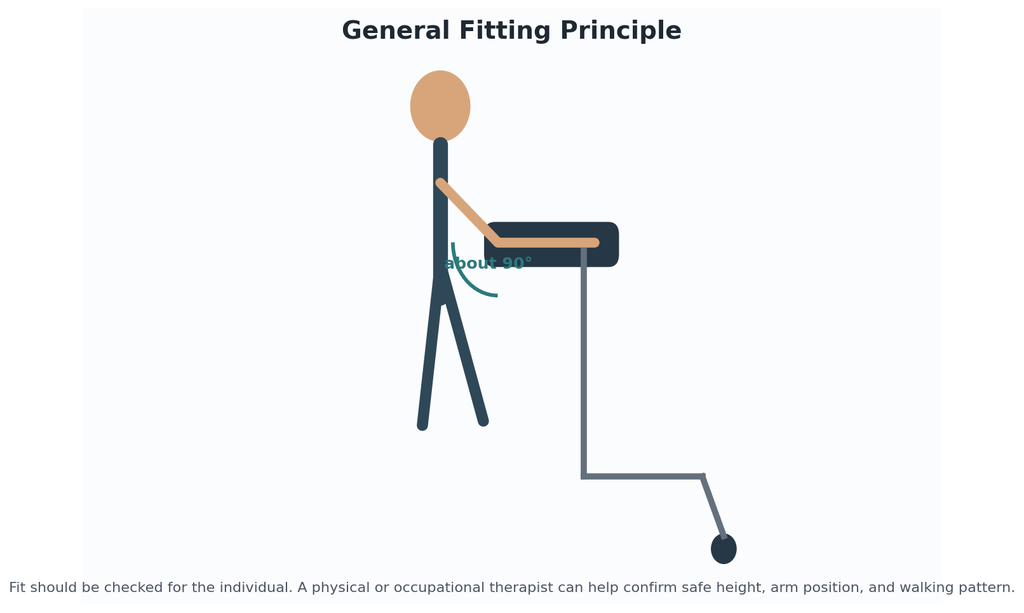
Figure 3. General forearm position shown for explanation only. Final fit should be individualized. Original illustration.
Platform Walker Safety Tips
- Use the walker only if the user has been assessed for the correct device and setup.
- Confirm all upper-limb and lower-limb weight-bearing restrictions after injury or surgery.
- Keep the walker close enough that the user does not have to reach or lean far forward.
- Check that platform clamps, height controls, straps, and grips are secure before use.
- Replace worn rubber tips, wheels, straps, or padding.
- Keep floors dry and remove loose rugs, cords, and other trip hazards.
- Do not use a walker on stairs unless a clinician has taught a specific safe method for that situation.
- If the walker suddenly feels unstable, stop using it until the frame and attachments are checked.
How to Choose a Platform Walker
The best choice starts with the person’s actual problem, not the product name. Use the following checklist before buying or changing a walker.
- Why is a standard walker difficult to use?
- Does the user need support on one side or both sides?
- Are there medical restrictions on the hand, wrist, elbow, shoulder, or leg?
- Will the walker be used mostly indoors, outdoors, or both?
- How much turning space is available at home?
- Does the user need to fold or lift the walker into a vehicle?
- Are brakes or a seat needed, or would those features add unnecessary complexity?
- Is the published weight capacity appropriate?
- Can replacement tips, straps, pads, or wheels be obtained later?
- Has a physical or occupational therapist checked the fit and walking pattern?
For many users, a simple compatible platform attachment is enough. Others may need a purpose-built forearm walker. The “best” platform walker is the one that fits the user and the environment safely.
When to Speak With a Physical or Occupational Therapist
Professional input is especially important if the user has recently had surgery, a fracture, a stroke, a neurological condition, repeated falls, major balance problems, or a sudden change in walking ability.
A PT or OT can look at more than the walker. They can assess transfers, turning, hand and arm function, home space, fatigue, and the way the person places weight through the device. That makes the recommendation more useful than choosing a product from a photo alone.
Frequently Asked Questions
Is a platform walker the same as a forearm walker?
Often, yes. “Platform walker” and “forearm support walker” are commonly used for devices that support the forearm on a padded platform. However, product names vary, so check the actual design.
Can you add a platform to a regular walker?
Many attachments are designed to clamp onto common walker frames. Compatibility varies, so use the manufacturer’s instructions and make sure the frame is suitable for the attachment.
Can a platform walker be used with one arm?
Some walkers use a single platform attachment on one side. Whether that is safe depends on the person’s balance, arm function, and walking needs.
Does a platform walker take pressure off the hands?
It can shift some support from the hands and wrists to the forearms. The exact load depends on the setup and the way the person walks.
Is an upright walker always better for posture?
No. An upright design can change arm position, but it does not automatically correct posture. Fit, strength, balance, and walking technique still matter.
Can I use a platform walker after a wrist or arm injury?
Do not assume that forearm support is allowed. The treating clinician must confirm the permitted weight-bearing level and where pressure can be placed.
What is the most important feature to check?
Fit is the first priority. After that, check compatibility, weight capacity, stability, adjustability, home space, and how easily the user can control the walker.
Final Takeaway
A platform walker gives the forearm a padded support point and can be useful when a normal hand grip is difficult. It comes in several forms, from a single attachment on a standard walker to full forearm-support and upright designs. The main advantage is flexibility, but that flexibility also means fit matters.
Choose the device based on function, safety, and the user’s environment. Check medical restrictions carefully. For a new walker or a major change in mobility, a physical or occupational therapist can help confirm the safest setup.