How to layer fragrances for a unique scented candle starts with one simple idea: each scent should have a job. One note can create a bright first impression, another can form the heart of the fragrance, and a deeper note can give the blend warmth and staying power. When these parts support one another, a candle can smell more rounded and personal instead of flat or overly sweet.
You do not need to combine a long list of aromas. In fact, simple blends are usually easier to understand and refine. Start with a clear mood, choose a few complementary scent families, test the idea on blotter strips or another no-heat method, and keep notes on what works. This approach makes fragrance layering more creative and much less confusing.
| Quick answer: Build around three roles: a light top note, a clear middle note, and a deeper base note. Use two or three candle-safe fragrance oils, keep one scent as the main character, and test small scent combinations before committing to a full candle. |
What Does Fragrance Layering Mean in Candles?
Fragrance layering can mean two related things. The first is blending different fragrance oils into one scent profile. The second is arranging complementary scent experiences so that different notes become noticeable at different moments. For most home fragrance makers, blending is the easier and more predictable place to start.
CandleScience explains that fragrances are commonly described through top, middle, and base notes. Those notes work together to create the overall scent profile. That language is useful because it helps you choose combinations based on how they behave, not only on whether each fragrance smells pleasant by itself.
Source: CandleScience – Fragrance Oil Blending 101
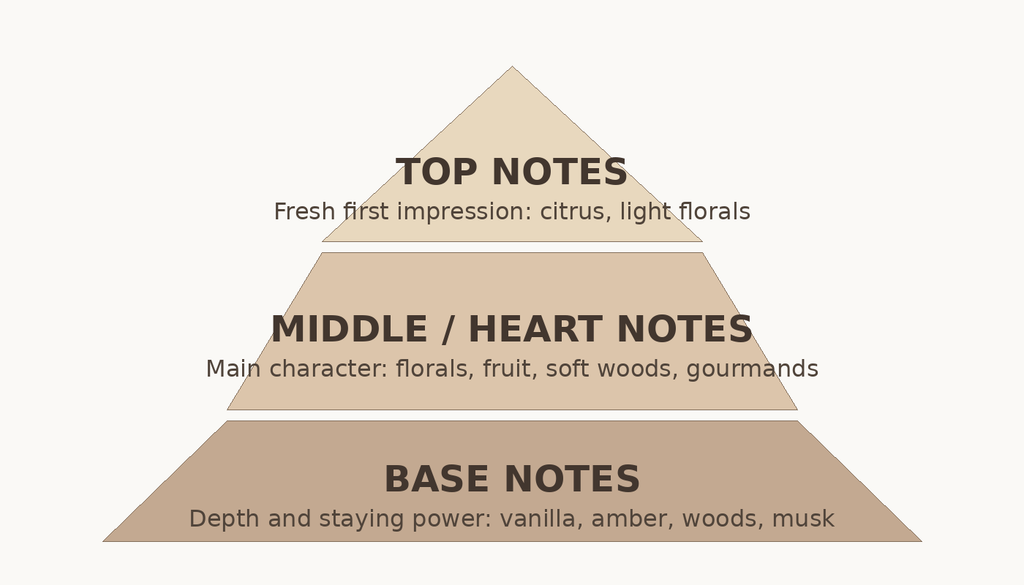
A simple scent pyramid: top notes introduce the fragrance, middle notes shape its character, and base notes add depth.
Understand Top, Middle, and Base Notes
Top notes: the first impression
Top notes are the aromas people notice first. They often feel bright, airy, crisp, or fresh. Citrus notes such as bergamot, lemon, and grapefruit are common examples. Light floral and green notes can also work well at the top of a blend. Because these notes are more volatile, they usually fade sooner than heavier aromas.
Middle notes: the heart of the fragrance
Middle notes give the blend its main personality. Florals, fruits, soft woods, herbs, and gourmand notes often sit here. If your candle is meant to feel like a garden, a bakery, a clean home, or a quiet evening, the middle notes usually carry most of that idea.
Base notes: depth and staying power
Base notes help the fragrance feel complete. Vanilla, amber, sandalwood, cedar, musk-style accords, tonka, and warm spices are common examples. They can soften sharper notes and help a lighter blend feel warmer and more grounded.
Further reading: CandleScience – What do fragrance notes mean?
How to Choose Fragrances That Work Together
A good blend needs contrast, but it also needs a shared direction. Think about the mood before you think about individual oils. Do you want the candle to feel fresh, cozy, elegant, earthy, fruity, or clean? Once the mood is clear, choosing scents becomes easier.
For example, bergamot can brighten a floral blend, while sandalwood can make it feel smoother and more sophisticated. Vanilla can soften spice, and a green note can stop a fruity fragrance from becoming too candy-like. The goal is not to make every scent equally strong. Instead, decide which note should lead and which notes should support it.
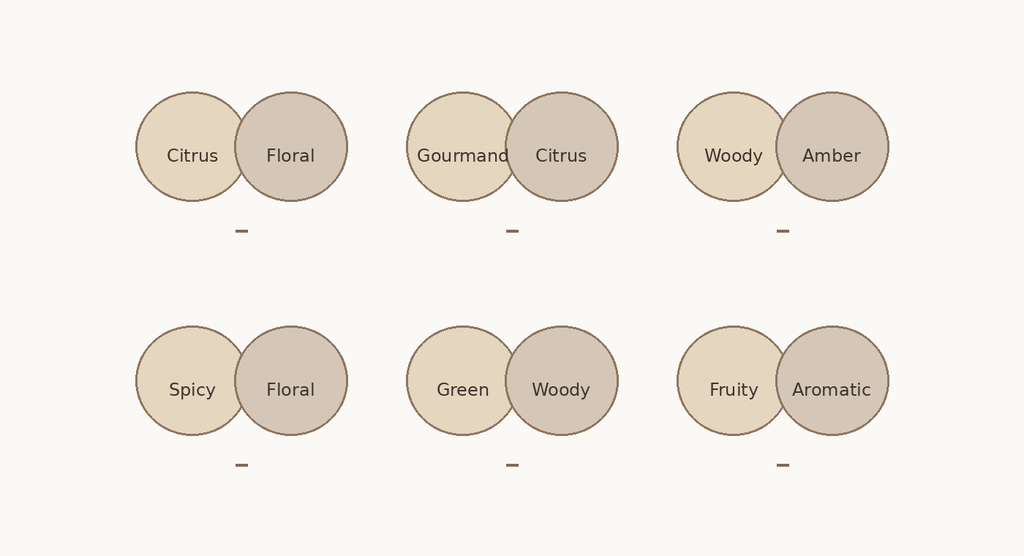
Pairing ideas can be complementary or closely related. These are starting points, not strict rules.
Easy Fragrance Pairings to Try
These combinations are useful as inspiration:
- Bergamot + peony + sandalwood – fresh, floral, and softly woody.
- Pear + vanilla + amber – fruity at first, then warm and smooth.
- Fig + cedarwood + tonka – green-fruity with a rich base.
- Orange + lavender + vanilla – bright, herbal-floral, and comforting.
- Rose + amber + soft woods – elegant and deeper than a simple floral.
- Apple + warm spice + sandalwood – cozy without relying only on sweetness.
- Coffee + vanilla + amber – a rounded gourmand profile with a warm finish.
Treat these as creative directions rather than fixed formulas. The same scent name can smell different from one fragrance oil supplier to another, so testing matters.
Start Simple: Two or Three Scents Are Enough
When you are new to candle fragrance blending, more is not always better. Two fragrances can already create something original. A third can add detail, but too many strong notes may compete with each other. CandleScience also notes that two or even three fragrance oils can be mixed to create a new candle scent, as long as the finished product follows the correct usage guidance for the wax and fragrance materials.
Source: CandleScience – Can I mix fragrance oils together?
A Simple Way to Build a Balanced Scent Profile
First, choose one main fragrance. This is the scent you want people to remember. Next, choose one supporting note that either adds contrast or makes the main fragrance feel fuller. Finally, if the blend still feels thin, add a softer base-style note to give it depth.
For example, if lavender is the main scent, lemon can make it feel fresher while sandalwood can make it calmer and more grounded. If pear is the main scent, vanilla can soften it and amber can add warmth. This “main + support + depth” approach is easier to control than mixing several equal-strength scents.
Test the Scent Before You Make a Candle
A no-heat scent test is a smart first step. Fragrance blotter strips can help you compare combinations before any candle-making work begins. Smell each fragrance alone, then smell the strips together. If one scent disappears, reduce the stronger supporting note in your next test. If the blend feels dull, a brighter top note may help.
Write down what you tested. Include the fragrance names, the rough balance, and what you noticed after a few minutes. These notes make it much easier to repeat a good idea later.
| Safety note: Use only fragrance materials that are labeled for candle use, and follow the wax and fragrance supplier’s directions. Candle-making involves hot wax and an open flame, so heat-related steps should be handled by a responsible adult and candles should never be left burning unattended. |
Layering vs. Blending: What Is the Difference?
Blending means combining fragrance materials into one unified scent. Layering is a broader idea. It can describe the way top, middle, and base notes unfold within a fragrance, or the way several home scents work together in a room. For an article focused on candles, blending fragrance oils is the most practical interpretation because it gives you better control over the final scent.
How to Make a Candle Scent Feel More Luxurious
A luxurious fragrance usually feels intentional rather than simply strong. One useful trick is to pair a familiar note with something less expected. Vanilla can feel more refined with cardamom or sandalwood. Rose can feel richer with amber or woods. Citrus can feel more polished when it sits beside tea, herbs, or soft florals.
Another helpful idea is contrast. A sweet scent often benefits from something dry, woody, green, or fresh. Likewise, a heavy woody blend can feel more open with citrus or a light floral note. Small contrasts keep the fragrance interesting.
Common Fragrance-Layering Mistakes
- Using too many strong scents: When every note wants to lead, the blend can become muddy. Start with fewer scents.
- Making every note equal: A clear main fragrance usually gives the blend more identity.
- Ignoring the fragrance family: A pairing may sound good by name but still clash in practice. Smell-test before deciding.
- Skipping notes: Without written notes, it is hard to repeat a successful blend or understand why one failed.
- Using unsuitable fragrance materials: Not every perfume, essential oil, or scented product is designed for candle use. Check product guidance first.
Candle Fragrance Safety Matters
A good scent is only part of a good candle. Fragrance materials should be selected and used according to the supplier’s instructions for the intended application. The National Candle Association also emphasizes using well-made candles properly and following basic candle safety practices.
Safety reference: National Candle Association – FAQs
How to Create Your Own Signature Candle Scent
A signature scent should be easy to describe in one short sentence. For example: “bright citrus over soft flowers and warm woods” or “juicy pear with vanilla and amber.” If you cannot explain the idea simply, the blend may be trying to do too much.
Once you have a clear description, refine the balance rather than adding more ingredients. Try a little more of the main note, a little less of the supporting note, or a softer base. Small changes often make a bigger difference than adding an entirely new fragrance.
Most importantly, trust the mood you are trying to create. Fragrance layering is part technique and part personal taste. The best combination is not the one with the longest ingredient list. It is the one that feels balanced, recognizable, and enjoyable from the first impression to the final lingering note.
Frequently Asked Questions
Can you mix two fragrances in one candle?
Yes. Two compatible candle-safe fragrance oils can be blended to create a custom scent. Follow the supplier’s usage guidance for the finished candle.
What candle scents blend well together?
Citrus and floral, gourmand and citrus, woody and amber, spicy and floral, green and woody, and fruity and aromatic combinations are useful starting points.
What are top, middle, and base notes?
Top notes create the first impression, middle notes form the heart of the fragrance, and base notes add depth and lasting character.
How many scents should you combine?
Two or three is a sensible starting point. Keeping the blend simple makes it easier to understand what each scent contributes.
Can vanilla work as a base note?
Yes. Vanilla is commonly used as a warm base-style note because it can add softness and depth.
Can floral and woody candle scents be combined?
Yes. Floral notes often pair well with sandalwood, cedar, amber-style accords, and other soft woody notes.
What is the difference between layering and blending?
Blending combines fragrances into one scent, while layering can also describe how different notes appear over time or how several scents work together in a space.
How do you make a candle scent smell more sophisticated?
Use a clear main note, add one contrasting or supporting note, and finish with a subtle base. Avoid making every scent equally strong..