| Quick Answer England introduced new household recycling rules on 31 March 2026. Food waste must normally be collected separately every week and free of charge, although some councils have transitional arrangements. Early results from East Yorkshire, Hull and Lincolnshire suggest participation is growing. Coventry is due to begin weekly collections in the week starting 7 September 2026. |
Food waste is a major environmental and household issue, but it has also become an important UK news story in 2026. New recycling rules are changing how homes in England separate unwanted food from general rubbish. After several months, councils are now starting to see whether weekly collections are making a difference.
The latest picture is mixed but mostly positive. Some councils report higher participation and more material being recycled. At the same time, local data shows that a large amount of food is still reaching general rubbish bins. This makes the first six months of the new system an important test.
Why food waste is in the spotlight in 2026
On 31 March 2026, England’s Simpler Recycling rules came into force for households. The government says waste collectors must normally separate food and garden waste, paper and card, other dry recyclables, and residual waste. The aim is to make recycling more consistent across England and reduce the amount of useful material sent for disposal.
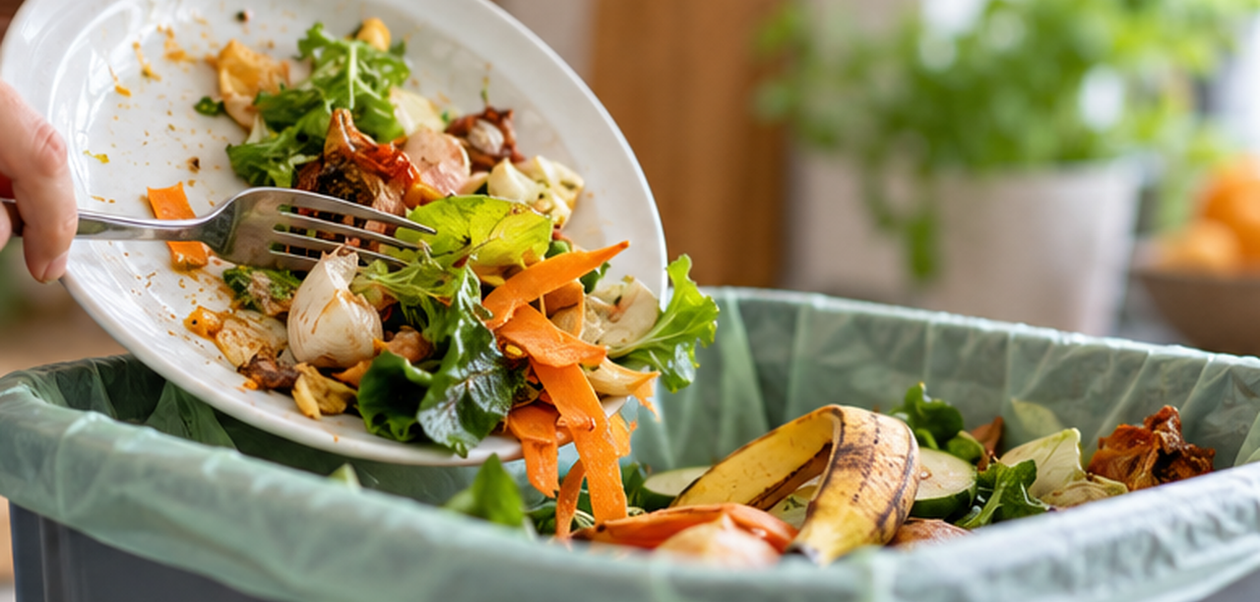
The official household recycling guidance says food waste must be collected at least weekly and free of charge. Councils should provide a small kitchen caddy and a larger outdoor container. However, some local authorities have approved transitional arrangements, so their food waste services can begin later.
Six months on: what the latest results show
A BBC report on the first six months looked at areas where weekly food waste collections are already running. East Riding of Yorkshire Council said the change had been as successful as expected. Around 9,000 households asked for food waste starter packs, and the council said many of those homes had not recycled food before.
That matters because participation is one of the biggest tests of a new collection system. A service can only divert food from general rubbish if households actually use it. In East Riding, the council believes weekly collections have encouraged more people to take part.
General rubbish still contains a lot of food
East Riding’s April study found that food made up about 20% of the rubbish going into general waste. The council also said a significant amount was packaged food. In other words, separating unavoidable scraps is only part of the challenge. Preventing edible food from being thrown away remains important too.
The same BBC report says two-thirds of the East Riding area now has weekly food waste collections. The remaining parts of the area are due to move to weekly collections in February 2027.
Hull reports more material being collected
Hull has also reported an increase. Since weekly food and garden-waste collections began, the amount collected rose by 16% compared with the same period a year earlier. The council also said 31.25 tonnes of compost had been donated to allotments and community groups since June 2026.
There is also a financial reason to separate food. Hull City Council told the BBC that recycling food waste costs less than half as much as disposing of it through general rubbish. That means better separation may reduce disposal costs as well as recover useful material.
Lincolnshire shows participation can vary by area
In Lincolnshire, four districts introduced food waste collections for the first time. Available council data showed that about one in two households were putting out a food caddy each week across the first four areas. In some places, participation was closer to seven in ten households.
These figures show why early results need context. A scheme may perform very differently from one neighbourhood to another. Clear instructions, suitable bins and regular collections can all affect how easily households adapt to the change.
Coventry starts weekly food waste collections in September
The rollout is still expanding. According to a second BBC report on Coventry, the city’s new food waste collections are due to start on 7 September 2026. New containers were delivered to homes during the summer as the city prepared for the service.
The Coventry City Council food waste page says households will receive a food waste bin, while flats and high-rise blocks will use smaller kitchen caddies and shared communal bins. The council asks residents to put their food waste container out by 7am on the correct collection day.
The council lists common items that can go into the food waste stream, including plate scrapings, eggshells, rice, pasta, bread, dairy products, meat, fish, fruit, vegetables, teabags and coffee grounds. Packaging, liquids, cooking oil, garden waste and non-food items should stay out.
What happens after food waste is collected?
Coventry says collected food will be sent to an anaerobic digestion facility. There, it can be recycled into nutrient-rich fertiliser. The process also produces gas that can be used to generate renewable energy and electricity.
This matches the national guidance. The government identifies anaerobic digestion as the preferred treatment for separately collected food waste when the resulting digestate is suitable for use on land as fertiliser.
Why food waste matters beyond the UK
The issue is much larger than local bin collections. The UN Environment Programme reported that 1.05 billion tonnes of food waste were generated worldwide in 2022. That was about 19% of the food available to consumers at household, food-service and retail level.
Households were responsible for about 60% of that total. Food service accounted for 28%, while retail made up 12%. UNEP also estimated that households wasted the equivalent of more than one billion meals every day in 2022.
UNEP says food loss and food waste together are responsible for roughly 8–10% of global greenhouse-gas emissions. The subject has received extra attention this year because the 2026 International Day of Zero Waste is focused on food waste.
Food waste and food loss are not exactly the same
The FAO definition of food waste focuses on decreases in food quantity or quality caused by decisions and actions at retail, food-service and consumer level. By contrast, food loss happens earlier in the supply chain, before retail.
FAO’s latest global indicator estimates that 13.3% of food was lost after harvest and before retail in 2023. The organisation says there has been no apparent global progress in reducing this loss rate since monitoring began in 2015. You can see the latest figure on the FAO SDG data portal.
So, are weekly food waste collections working?
The early evidence suggests that weekly collections can increase participation and capture more food for recycling. East Riding has seen thousands of households request starter packs. Hull has reported higher collected tonnage. Lincolnshire has seen participation build across the first areas to launch the service.
However, the data also shows that the job is not finished. East Riding still found a large share of food in general rubbish. Participation in Lincolnshire varies between areas. In addition, some councils are only now starting their weekly services.
Therefore, it is too early to judge the full national impact. What can be said is that the first local results provide signs of progress, while also showing where councils and households still have room to improve.
What comes next
More areas will now add or expand weekly collections as England continues the Simpler Recycling rollout. Coventry is one of the latest examples. Other councils with transitional arrangements will follow their approved schedules.
For households, the main change is simple: keep food separate from general rubbish and follow the local council’s rules about what can go into the caddy. For councils, the next test is whether participation stays strong after the first months and whether less food remains in residual waste.