
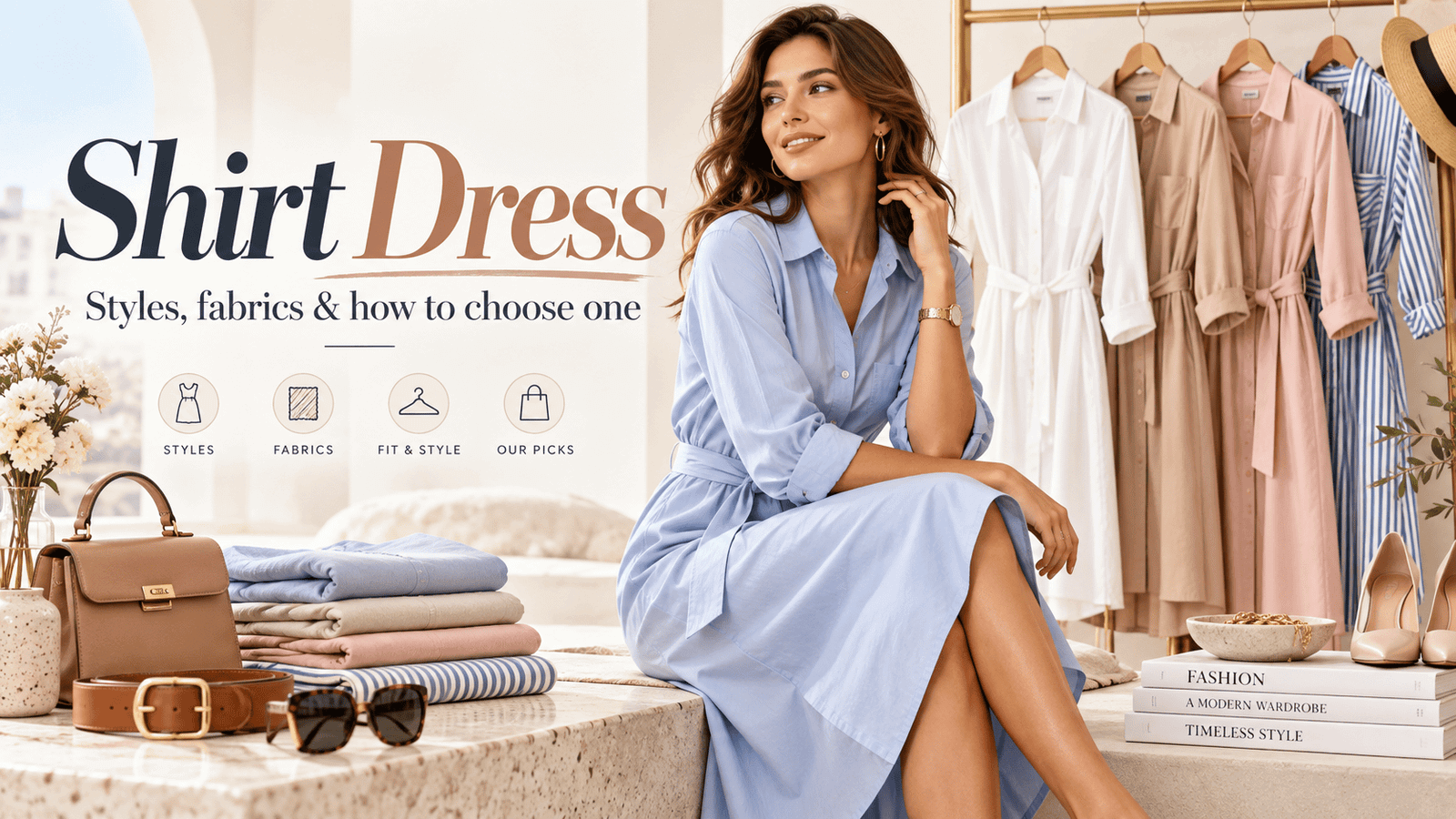
A commercial-intent fashion guide designed to answer what a shirt dress is, how to compare options, what fabrics and details matter, and how to style one across work, weekends, travel and changing seasons.
Primary related phrases: women’s shirt dress, midi shirt dress, cotton shirt dress, linen shirt dress, belted shirt dress, shirt dress for work, how to style a shirt dress, best shirt dresses.
Shirt Dress: The One-Piece Outfit That Keeps Earning Its Place
A shirt dress takes the familiar structure of a button-down shirt – a collar, a front placket and often cuffs or a chest pocket – and extends it into a dress. That simple idea is exactly why the style has lasted. It can look crisp without feeling overly formal, relaxed without looking unfinished, and polished with only a few small styling decisions.
For shoppers, the useful question is not simply whether shirt dresses are fashionable. It is which version fits the job you need it to do. A cotton poplin midi can be an easy work or travel piece. Linen feels lighter and more relaxed in warm weather. Denim gives the silhouette more structure. A fluid viscose blend can read dressier with the same basic shirt-inspired shape.
The style is also current rather than merely nostalgic. Vogue’s Spring 2026 dress-trend report included the shirtdress among the season’s key dress directions, while a September 2026 Vogue edit again highlighted a plaid shirtdress as an early-fall option. That makes the shirt dress a useful example of a wardrobe staple that can move with trends without depending on them.
What Exactly Is a Shirt Dress?
At its simplest, a shirt dress is a dress built from shirt details. Most versions include a collar and button front, while many add cuffed sleeves, a yoke, patch pockets or a removable belt. Length can vary from mini to maxi, and the silhouette can be straight, oversized, softly shaped or more tailored.
This flexibility is what separates the category from a single trend. One shopper may want a neat midi for the office; another may prefer an oversized cotton version for weekends; someone packing for a warm-weather trip may care most about breathability, pockets and easy layering. The best choice depends on fabric, construction, length and how you plan to wear it.
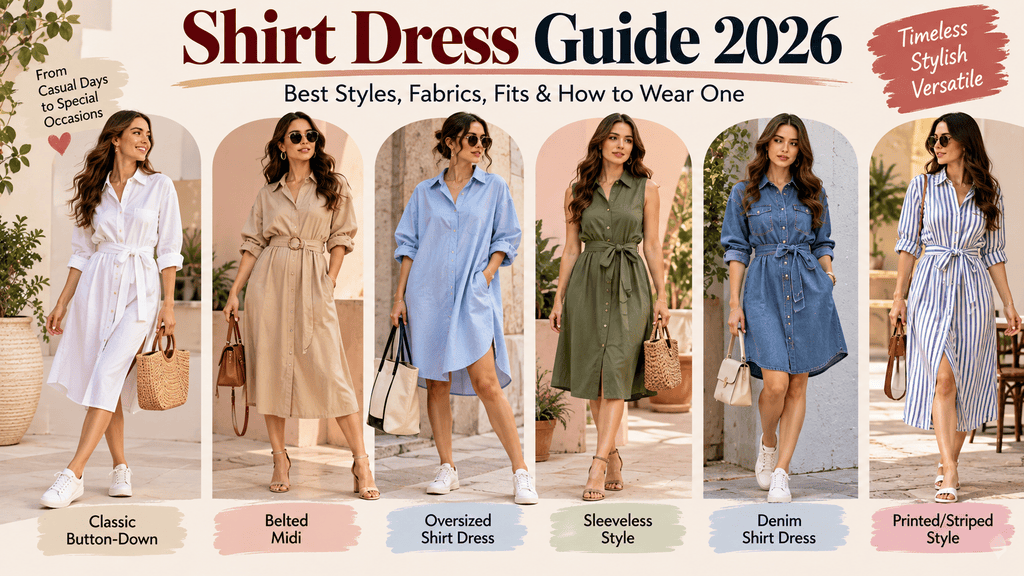
Visual guide: common shirt-dress silhouettes, from classic button-down and belted midi styles to denim and striped versions.
The Main Shirt Dress Styles to Know
Classic button-down
This is the closest to a traditional shirt: collar, buttons, sleeves and a fairly clean line. It is easy to dress up with loafers or simple heels, and easy to relax with sneakers or flat sandals.
Belted midi
A removable self-belt adds styling flexibility without changing the basic garment. Wear it tied, swap in a leather belt, or remove it for a straighter silhouette. Midi lengths are especially adaptable for work, daytime events and transitional weather.
Oversized shirt dress
An oversized cut prioritizes ease and layering. The important buying detail is not a beauty ideal; it is proportion and movement. Check shoulder placement, sleeve length, garment width and hem length so you know whether the volume feels intentional for the way you plan to wear it.
Sleeveless and short-sleeve versions
These reduce bulk in warm weather and can also work under a cardigan or light jacket. Look closely at armhole coverage, fabric opacity and whether the collar keeps enough structure after repeated washing.
Denim, striped and printed styles
Denim adds structure and can bridge casual and polished dressing. Stripes reference classic shirting, while prints move the piece toward a more expressive dress. In each case, the same buying rules still matter: fabric composition, seam quality, button spacing, care instructions and return policy.
Why Shirt Dresses Still Work in 2026
The strongest reason is versatility. The shirt dress already contains structure at the neckline and front, so it needs less styling than many separates. A change of shoes, belt or outer layer can shift the same piece from casual to polished.
That versatility shows up repeatedly in current editorial coverage. Good Housekeeping’s September 2026 shirt-dress guide describes the silhouette as a summer-to-fall staple and highlights tall boots, trench coats, denim layers and belts as practical ways to change the look. Glamour’s March 2026 styling guide similarly focuses on the finishing details – particularly shoes, accessories and layering – rather than treating the dress as a one-look item.
Best Fabrics for a Shirt Dress
Fabric changes almost everything: drape, heat, wrinkle level, structure and care. Two shirt dresses with an identical pattern can feel completely different if one is crisp cotton poplin and the other is fluid viscose. Read the fiber-content label before judging a dress only by its product photo.
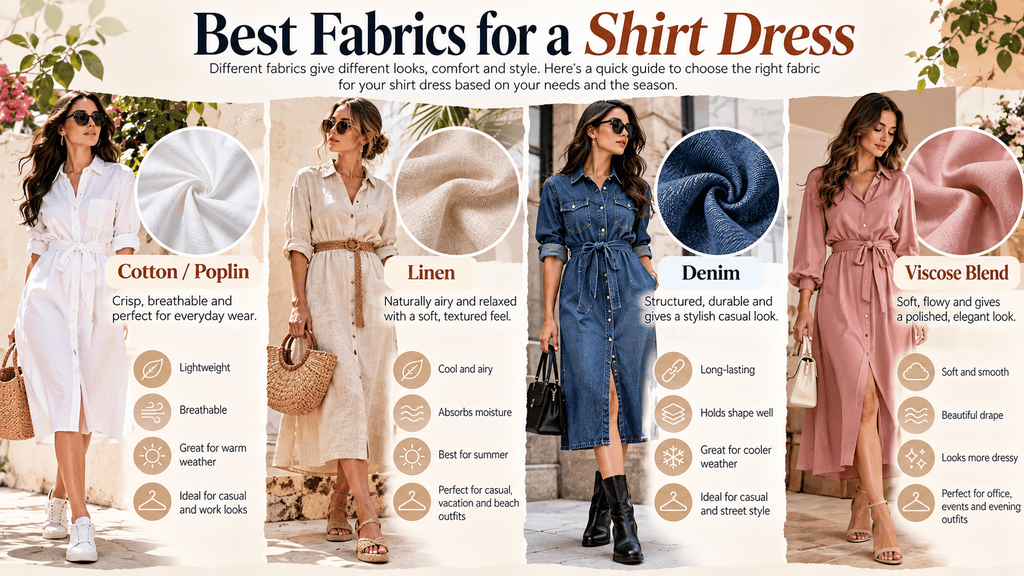
Fabric comparison: cotton/poplin, linen, denim and viscose-blend shirt dresses each create a different level of structure, airflow and drape.
Quick fabric comparison
| Fabric | Feel | Best for | Watch for | Typical look |
| Cotton / poplin | Crisp, breathable | Work, warm weather, everyday | Can wrinkle; check opacity | Clean and classic |
| Linen | Airy, textured | Hot climates, travel, relaxed days | Wrinkles easily | Relaxed and natural |
| Denim | Structured, durable | Casual wear, cooler days | Can feel heavier | Casual and defined |
| Viscose / rayon blends | Soft, fluid | Office-to-evening, dressier looks | Care and wrinkling vary | Smooth and draped |
| Poly blends | Easy-care, often affordable | Frequent wear, travel | May be less breathable | Varies by weave |
Good Housekeeping’s apparel analyst notes that 100% cotton keeps the style close to its button-up roots and works well for breathability, while linen is another airy natural fiber. See the source discussion on fabric and construction. Treat those descriptions as a starting point, then check the actual fiber percentages and care label on the product you are considering.
How to Compare Shirt Dresses Before You Buy
Commercial-intent readers usually need help deciding, not just inspiration. These are the details worth checking on a product page before you add a shirt dress to your cart:
- Fabric composition: check the percentages, not only marketing terms such as “linen-look” or “silky.”
- Garment measurements: compare bust, waist, hip, shoulder and total length measurements with a similar garment you already own.
- Button placement: look for enough overlap and secure spacing through the front placket.
- Opacity and lining: especially important with light colors, thin cottons and summer fabrics.
- Pockets: confirm whether they are functional and where they sit.
- Belt design: removable self-belts are more flexible than sewn-in ties.
- Care: machine-washable fabric may be more practical for frequent wear; some blends need gentler handling.
- Return policy: useful when sizing and drape are hard to judge online.
- Review photos: customer photos can reveal fabric weight, color and length more clearly than studio images.
Shirt Dress for Work: What Makes It Practical?
For work, focus on the garment and the dress code rather than chasing a single formula. A midi length, secure button front, comfortable fabric and an easy layering piece are usually more useful than trend-heavy details. Loafers, flats or boots can keep the outfit polished without making it feel overly formal. A blazer or trench adds structure when the setting calls for it.
A useful real-world signal comes from a r/femalefashionadvice discussion about work dresses, where commenters praised the versatility of a specific shirt dress for office wear but also raised questions about how loose it fits. That is exactly the sort of shopping concern an article should answer: not “does this make everyone look good?” but “what are the garment measurements, how does the cut behave, and does it suit the buyer’s intended setting?”
How to Style a Shirt Dress Without Overcomplicating It
A shirt dress does not need a long list of accessories. Start with the setting, then choose one or two changes that make the outfit feel intentional.
Casual day
Try a cotton or denim shirt dress with clean sneakers, flat sandals or simple loafers. Add a crossbody or tote and keep the rest minimal. Rolling the sleeves can make a long-sleeve style feel more relaxed.
Work or meetings
Choose a fabric with enough structure to hold its shape, then add loafers, flats or boots. A blazer, cardigan or trench can give the look a more finished layer. If the dress includes a belt, use it only if it helps the outfit work for you; it is not a requirement.
Warm-weather travel
Prioritize breathable fabric, functional pockets and easy care. Sandals or sneakers keep the outfit practical, and an oversized shirt dress can double as a light layer over another outfit when the buttons open fully.
Dinner or an event
A smoother fabric, more refined shoes and a compact bag can make a shirt dress feel evening-ready without changing the basic silhouette. Jewelry can be simple because the collar and button front already give the outfit visual structure.
For visual idea generation, this YouTube shirt-dress lookbook demonstrates multiple ways to restyle the same garment. Use videos like this for outfit inspiration, not as the sole authority for fit or buying claims. Current editorial guidance from Glamour and Good Housekeeping is stronger for time-sensitive 2026 context.
Shirt Dress vs. T-Shirt Dress vs. Wrap Dress
| Style | Defining detail | Usually feels | Useful when you want |
| Shirt dress | Collar + button-front shirt construction | Structured to relaxed | One piece that can move between casual and polished |
| T-shirt dress | Tee-inspired neckline and jersey construction | Soft and casual | Simple, low-structure everyday dressing |
| Wrap dress | Overlapping front or wrap effect | Adjustable and dressier | A tied or wrapped silhouette with a different construction |
What Is Trending for Shirt Dresses in 2026?
The most useful trend information is broad, because product stock changes quickly. Current 2026 coverage points to several directions: classic shirting details, relaxed or oversized silhouettes, plaid and stripes, denim, belted midis, and styles that transition from warm weather into fall.
Vogue’s Spring 2026 dress-trend coverage describes shirtdresses ranging from off-the-shoulder interpretations to more buttoned-up versions, while Vogue’s September 2026 dress edit includes a plaid shirtdress among early-fall choices. The takeaway is not that every shopper needs a runway-led version; it is that the underlying category remains active across both classic and updated forms.
Brand and Retailer Research: How to Investigate Options
Because “shirt dress” has commercial intent, readers may arrive ready to compare brands. A useful article should not pretend one label is universally best. Instead, compare what each product actually offers. Look at fabric, garment measurements, construction details, care, returns and price band.
Recent editorial roundups reference options across very different price points and aesthetics, including mainstream labels and designer brands. Rather than copying those product lists, use them to understand the market: there are crisp cotton classics, minimalist oversized styles, plaid fall versions, denim choices and fluid dressier pieces. Then evaluate live product pages at the time you publish or update your article.
A Simple Buyer Checklist
- Decide the main use: work, casual, travel, warm weather, layering or events.
- Choose the fabric based on climate, care and the amount of structure you want.
- Check actual garment measurements and total length.
- Inspect button spacing, opacity, pockets, belt and seams in product photos.
- Read a mix of recent reviews, including customer photos when available.
- Compare at least two similar options before paying more for branding alone.
- Check shipping and return terms before buying online.
Frequently Asked Questions
What is a shirt dress?
A shirt dress is a dress based on shirt construction, usually with a collar and button front. Depending on the design, it may also include sleeves with cuffs, pockets, a yoke or a belt.
Are shirt dresses still in style in 2026?
Yes. Current 2026 fashion coverage from Vogue, Good Housekeeping and Glamour continues to feature shirtdresses in spring, summer and early-fall styling. The category includes both classic and updated silhouettes.
What fabric is best for a shirt dress?
There is no single best fabric. Cotton and poplin are crisp and breathable, linen is airy and relaxed, denim is structured, and viscose or rayon blends can create a softer drape. Choose according to climate, care and intended use.
Can you wear a shirt dress to work?
Often, yes, depending on the workplace dress code and the individual garment. A secure button front, appropriate length, comfortable fabric and practical layering options are useful considerations.
What shoes work with a shirt dress?
Sneakers and flat sandals suit casual outfits; loafers, flats and boots can work for polished or work looks; dressier shoes can shift a fluid shirt dress toward an evening outfit.
Do you have to wear a belt with a shirt dress?
No. A belt is simply one styling option. Many shirt dresses are designed to work loose or oversized, while others include a removable self-belt for flexibility.
How do I shop for a shirt dress online?
Start with fiber content and garment measurements, then check button placement, opacity, care instructions, reviews, customer photos and the return policy. Product photos alone are rarely enough to judge fit and fabric.
Can a shirt dress work across seasons?
Yes. Lightweight cotton and linen are useful in warm weather, while denim, long sleeves, boots, knitwear, blazers and coats can extend the same general silhouette into cooler months.